Assessing Algal Growth in Water Eutrophication (A. G. W. E.)
Oops! Something went wrong.
This page didn't load Google Maps correctly. See the JavaScript console for technical details.
[1] Algae, phytoplankton and chlorophyll. Environmental Measurement Systems.
(2021, September 27). Retrieved October 2, 2021,
from https://www.fondriest.com/environmental-measurements/parameters/water-quality/algae-phytoplankton-chlorophyll.
[2] Nutrients, eutrophication and harmful algal blooms along the freshwater to marine continuum. (2020). WIREs Water, 7(4). https://doi.org/10.1002/wat2.1453
You are viewing: Clear View
Change Views:
Yearly
Observe
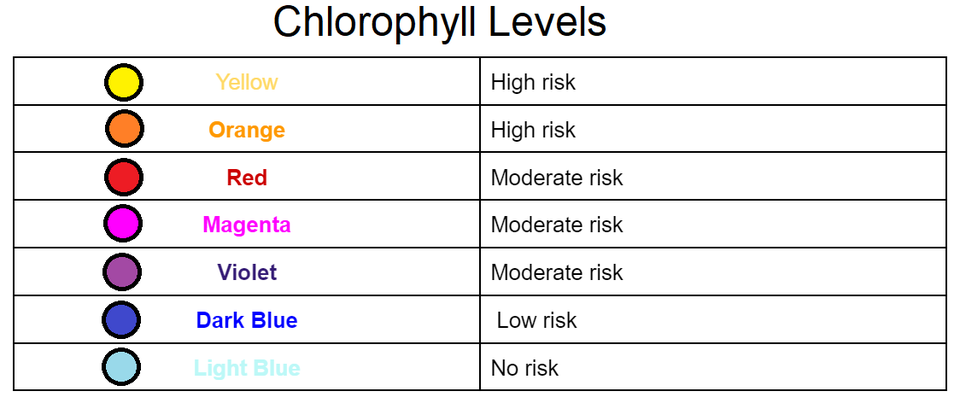
Chlorophyll
Chlorophyll is a color pigment found in algae, phytoplankton, and plants.
This molecule makes algae and plants the color green.
Chlorophyll is used as a photoreceptor in photosynthesis.
These photoreceptors absorb light energy, while chlorophyll absorbs energy from sunlight.
[1] high levels of chlorophyll would result in high levels of nutrients.
Increase levels of these nutrients associated with the occurrence of algal bloom.[2]
The increase in nutrients is caused by human activities such as the use of fertilizer for farming,
improper sewage of animal farms and burning of fossil fuels.